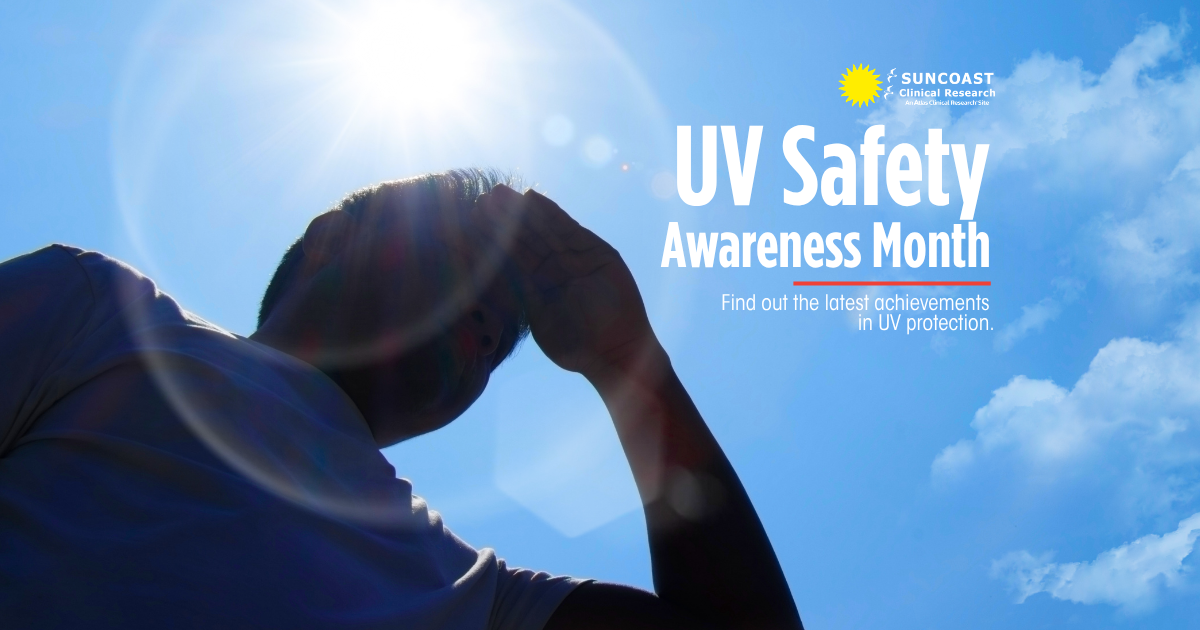
Protecting your skin starts with simple daily habits. During UV Safety Month, it is a great time to learn how sunscreen, shade, protective clothing, and everyday prevention habits can help support long-term skin health.
Sun protection keeps getting better thanks to research. Recent advances in sunscreen ingredients, including continued interest in ingredients such as bemotrizinol, are helping researchers and healthcare professionals better understand how to improve protection against ultraviolet, or UV, rays.
Innovation in prevention is just as important as innovation in treatment. By improving the tools people use to protect their skin every day, research may help support healthier habits and reduce the long-term effects of sun damage.
Why UV Safety Matters
UV radiation comes from the sun and artificial sources such as tanning beds. Too much UV exposure can damage skin cells and increase the risk of sunburn, premature skin aging, and skin cancer.
The two main types of UV rays that affect the skin are:
- UVA rays, which can contribute to skin aging and long-term skin damage
- UVB rays, which are more closely linked to sunburn and can also contribute to skin cancer risk
UV exposure can happen even when it is cloudy, cool, or overcast. It can also occur during everyday activities such as driving, walking outside, gardening, exercising, or attending outdoor events.
That is why UV Safety Month is an important reminder that skin protection is not only for beach days. It is part of everyday health.
Everyday Habits That Help Protect Your Skin
Simple daily habits can help reduce UV exposure and support long-term skin health.
Ways to help protect your skin include:
- Applying broad-spectrum sunscreen before going outdoors
- Choosing sunscreen with SPF 30 or higher
- Reapplying sunscreen as directed, especially after swimming or sweating
- Wearing a wide-brimmed hat and sunglasses
- Using lightweight, sun-protective clothing
- Seeking shade during peak sun hours
- Avoiding tanning beds
- Checking your skin regularly for new or changing spots
Anyone can experience sun damage, regardless of age or skin tone. People with lighter skin may burn more easily, but UV exposure can affect all skin types.
What Is Bemotrizinol?
Bemotrizinol, also known as BEMT, is a sunscreen ingredient designed to help absorb UV rays. It is considered a broad-spectrum UV filter, meaning it helps protect against both UVA and UVB rays.
Broad-spectrum protection is important because both types of UV radiation can contribute to skin damage in different ways. As sunscreen science continues to advance, ingredients like bemotrizinol are part of a larger effort to improve sun protection options and make sunscreen easier to use consistently.
Sunscreen works best when people are willing to use it correctly and regularly. That is why research into new sunscreen ingredients and improved formulations matters.
Why Sunscreen Innovation Matters
Sunscreen is one of the most common tools people use to protect their skin, but not every sunscreen feels the same. Some products may feel heavy, leave a white cast, feel greasy, or be difficult to wear every day.
When sunscreen products are more comfortable and easier to use, people may be more likely to make them part of their daily routine.
Advances in sunscreen ingredients and formulations may help support:
- Better broad-spectrum UV protection
- More comfortable daily sunscreen use
- Products that work well for different skin types
- Improved feel and appearance on the skin
- More options for people with different skincare needs
These improvements are part of a larger public health goal: helping people prevent sun damage before it starts.
The Role of Clinical Research in Prevention
Clinical research is often associated with studying treatments for existing health conditions, but research also plays an important role in prevention.
In skin health, research helps scientists better understand UV damage, sunscreen protection, skin cancer risk, and ways to support healthier long-term outcomes.
Clinical research may help researchers:
- Evaluate new sunscreen ingredients
- Study how well products protect against UVA and UVB rays
- Improve prevention strategies for sun-related skin damage
- Better understand skin cancer risk factors
- Develop new approaches for supporting long-term skin health
Many advances in healthcare are possible because researchers, healthcare professionals, and volunteers take part in carefully designed studies. At Suncoast Clinical Research, we support patient-focused research across a variety of health areas. Depending on current study availability, research opportunities may include studies related to prevention, wellness, dermatology, or other health conditions.
UV Safety Is Prevention in Action
This UV Safety Awareness Month, we are highlighting recent advances in sunscreen ingredients and the role research plays in improving skin protection. Protecting your skin does not have to be complicated. Small steps, practiced consistently, can help reduce UV exposure over time.
Consider making sun protection part of your routine by:
- Keeping sunscreen near your toothbrush or skincare products
- Carrying sunscreen in your bag, car, or beach tote
- Wearing sunglasses when driving or walking outside
- Choosing shaded areas when possible
- Wearing protective clothing during outdoor activities
- Scheduling regular skin checks with a healthcare provider
Prevention is an important part of health. As research continues to improve sunscreen ingredients and sun protection strategies, individuals can also take simple steps each day to help protect their skin.
Questions to Ask Your Healthcare Provider About Skin Protection
If you are concerned about sun exposure or skin health, consider asking your healthcare provider:
- What SPF should I use daily?
- How often should I reapply sunscreen?
- Do any of my medications make me more sensitive to the sun?
- How often should I have a skin check?
- What skin changes should I watch for?
- Are there clinical research studies related to skin health or prevention that I may qualify for?
Frequently Asked Questions
What does UV stand for?
UV stands for ultraviolet. UV radiation comes from the sun and artificial sources such as tanning beds.
Why is UV exposure harmful?
Too much UV exposure can damage skin cells and may increase the risk of sunburn, premature aging, and skin cancer.
What does broad-spectrum sunscreen mean?
Broad-spectrum sunscreen helps protect against both UVA and UVB rays.
What is bemotrizinol?
Bemotrizinol, also known as BEMT, is a sunscreen ingredient that helps absorb UV rays and provides broad-spectrum protection.
Does sunscreen replace other sun protection habits?
No. Sunscreen works best when used with other protective habits, such as seeking shade, wearing hats, using sunglasses, and wearing sun-protective clothing.
Why is clinical research important for sun protection?
Clinical research helps researchers evaluate new ingredients, improve prevention strategies, and better understand how to protect long-term skin health.
What happens after I sign up for a clinical research study?
A study team member may contact you to review basic eligibility questions, explain the study, and discuss next steps.
Is participation voluntary?
Yes. Participation in clinical research is voluntary, and participants may choose to leave a study at any time.
Learn More About Clinical Research Opportunities
UV Safety Month is a reminder that prevention matters. From everyday sunscreen habits to new advances in sunscreen ingredients, research continues to improve how we protect skin and support long-term health.
Interested in participating in clinical research studies? Contact Suncoast Clinical Research to learn about current or future enrolling studies.
Sources
American Academy of Dermatology – Sunscreen FAQs
https://www.aad.org/media/stats-sunscreen
American Academy of Dermatology – Skin Cancer Prevention
https://www.aad.org/public/diseases/skin-cancer/prevent/how
Skin Cancer Foundation – Sun Protection
https://www.skincancer.org/skin-cancer-prevention/sun-protection/
American Cancer Society – UV Radiation
https://www.cancer.org/cancer/risk-prevention/sun-and-uv/uv-radiation.html
U.S. Food and Drug Administration – Sunscreen: How to Help Protect Your Skin from the Sun
Verywell Health – 6 Things Dermatologists Want You to Know About Bemotrizinol
https://www.verywellhealth.com/things-to-know-about-bemotrizinol-sunscreen-11998152
Good Housekeeping – Scientists Say This New Ingredient Could Make Sunscreen Better
https://www.goodhousekeeping.com/beauty/anti-aging/a71375113/bemotrizinol-sunscreen-ingredient/