
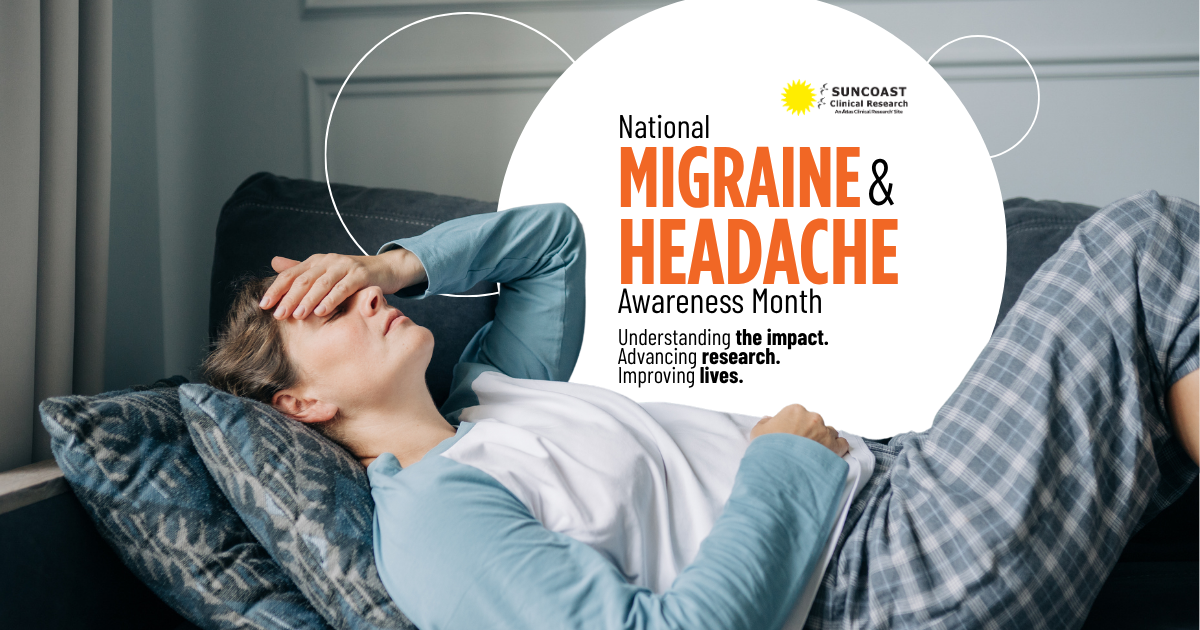
Every June, Migraine & Headache Awareness Month helps bring attention to conditions that affect daily life for millions of people.
While many people use the words “migraine” and “headache” interchangeably, migraine is more than a bad headache. Migraine is a neurological condition that can cause moderate to severe head pain along with other symptoms such as nausea, vomiting, light sensitivity, sound sensitivity, visual changes, fatigue, and difficulty functioning.
For some people, migraine attacks happen occasionally. For others, they may occur frequently and interfere with work, school, family responsibilities, sleep, and quality of life.
At Suncoast Clinical Research, we recognize the importance of continued migraine and headache research, and the role local communities play in helping advance future treatment options.
Understanding Migraine and Headache
Headaches can happen for many reasons. Some may be mild and short-lived, while others may be more severe or recurring.
Migraine is a specific type of headache disorder that can involve changes in the brain, nerves, and blood vessels. A migraine attack may last for hours or even days and can be disabling for some people.
Common migraine symptoms may include:
- Throbbing or pulsing head pain
- Pain on one side of the head
- Nausea or vomiting
- Sensitivity to light
- Sensitivity to sound
- Sensitivity to smells
- Blurred vision or visual changes
- Dizziness
- Fatigue
- Difficulty concentrating
Some people may also experience aura before or during a migraine attack. Aura symptoms can include flashing lights, blind spots, tingling, numbness, or trouble speaking. Not everyone with migraine experiences aura.
Migraine vs. Headache: What’s the Difference?
A headache usually refers to pain or discomfort in the head, scalp, or neck. Tension-type headaches, for example, may feel pressure or tightness around the head that may be mild to moderate.
Migraine can involve head pain, but it often includes additional symptoms that affect the whole body. Migraine attacks may interfere with daily activities and may worsen with movement, light, sound, or certain smells.
A regular headache may cause discomfort. A migraine attack may make it difficult to work, drive, care for family, attend school, or complete everyday tasks.
Understanding the difference can help people have more informed conversations with a healthcare provider and explore care options that may better fit their symptoms.
Common Migraine Triggers
Migraine triggers can vary from person to person. A trigger is something that may contribute to the start of a migraine attack, although triggers do not always cause symptoms every time.
Common migraine triggers may include:
- Stress or changes in stress levels
- Lack of sleep or changes in sleep routine
- Skipping meals
- Dehydration
- Hormonal changes
- Bright lights or flashing lights
- Loud sounds
- Strong smells
- Weather or barometric pressure changes
- Alcohol
- Certain foods or food additives
- Too much caffeine or caffeine withdrawal
- Overuse of certain pain-relief medications
Keeping a migraine journal may help some people identify patterns. Tracking symptoms, sleep, meals, stress, weather changes, medications, and possible triggers can provide helpful information for a healthcare provider.
Why Migraine & Headache Awareness Matters
Migraines are often misunderstood. Some people may be told to “push through it” or may feel their symptoms are not taken seriously. This can delay care and make people feel isolated.
Awareness helps reduce stigma and encourages people to recognize when recurring headaches or migraine symptoms may need medical attention.
Migraines can affect more than physical health. It may also impact mood, relationships, work performance, school attendance, family life, and overall quality of life.
No one should feel dismissed or blamed for experiencing migraine symptoms. Migraine is a real medical condition, and support is available.
When to Seek Medical Support for Migraines
It may be helpful to speak with a healthcare provider if headaches or migraine symptoms are frequent, worsening, difficult to manage, or interfering with daily life.
Consider seeking medical support if you:
- Have headaches that happen often
- Have headaches that are becoming more severe
- Need over-the-counter medication frequently
- Have migraine symptoms that interfere with work, school, or daily activities
- Experience nausea, vomiting, light sensitivity, or sound sensitivity with head pain
- Have new or unusual headache symptoms
- Have headaches that do not improve with current treatment
- Are unsure whether your symptoms are migraine or another type of headache
Seek emergency medical care for sudden, severe headache pain, especially if it is the worst headache you have ever experienced, or if it occurs with weakness, confusion, vision changes, trouble speaking, fever, stiff neck, fainting, or symptoms after a head injury.
How Clinical Research Helps Move Migraine Care Forward
Clinical research helps doctors and scientists better understand migraine and headache disorders. Research may also help evaluate investigational treatment approaches that could support future care.
Migraine research may focus on:
- How migraine attacks begin in the brain
- Why some people experience aura
- How inflammation and nerve signaling may contribute to symptoms
- New ways to prevent migraine attacks
- Faster-acting treatment options
- Long-term symptom management
- Personalized treatment strategies
- Improving quality of life for people living with migraine
Many treatments available today were made possible because volunteers chose to participate in clinical research studies. Research volunteers play an important role in helping move medicine forward for future patients and families.
Migraine Research Advancements
Migraine research has advanced significantly in recent years. Scientists continue studying pathways involved in migraine, including nerve signaling and calcitonin gene-related peptide, also called CGRP.
Research in this area has helped expand the understanding of migraine and has contributed to newer approaches for both acute treatment and prevention. Researchers are also studying non-medication approaches, digital tools, neuromodulation devices, and more individualized treatment strategies.
While progress has been made, many people still live with migraine symptoms that are difficult to manage. Some people may not respond well to current treatments, may experience side effects, or may need additional options. That is why ongoing clinical research remains important.
Questions to Ask Your Healthcare Provider About Migraine
If you experience frequent or severe headaches, consider asking your healthcare provider:
- Could my headaches be migraine?
- What symptoms should I track?
- Are there possible triggers I should watch for?
- How often is too often to use over-the-counter pain medication?
- What treatment options may be appropriate for me?
- Should I see a headache specialist or neurologist?
- Are there clinical research studies I may be eligible for?
These conversations can help you better understand your symptoms and explore care options that may be right for you.
Frequently Asked Questions
Is migraine the same as a headache?
No. Migraine is a neurological condition that can include head pain, but it often involves other symptoms such as nausea, vomiting, light sensitivity, sound sensitivity, fatigue, and difficulty functioning.
What does a migraine feel like?
Migraine may cause throbbing or pulsing pain, often on one side of the head. Symptoms may also include nausea, sensitivity to light or sound, dizziness, visual changes, and fatigue.
What are common migraine triggers?
Common triggers may include stress, sleep changes, skipped meals, dehydration, hormonal changes, bright lights, strong smells, weather changes, alcohol, certain foods, and medication overuse.
Can migraine happen without aura?
Yes. Many people experience migraines without aura. Aura is only one possible feature of migraine and does not happen for everyone.
When should I talk to a healthcare provider?
You should consider speaking with a healthcare provider if headaches are frequent, severe, worsening, unusual, or interfering with daily life.
Why is migraine research important?
Migraine research helps scientists better understand what causes migraine, how symptoms develop, and how investigational approaches may help improve future care.
Who can participate in migraine research studies?
Eligibility varies by study. Some studies may look for adults with a history of migraine, frequent headaches, specific symptom patterns, or prior treatment experience. A study representative can help determine whether someone may qualify.
Is participation in a clinical trial voluntary?
Yes. Participation in clinical research is voluntary. Participants may ask questions before deciding whether to join and may choose to leave a study at any time.
Learn More About Migraine Research Opportunities
If you have concerns about your health, consider speaking with a healthcare provider. Asking questions, learning your numbers, and understanding your options can be important first steps.
Interested in participating in clinical research studies? Call 727-855-7103 or complete the form to become a volunteer and learn about current or future enrolling studies at Suncoast Clinical Research.
Sources
Mayo Clinic — Migraine: Symptoms and Causes
https://www.mayoclinic.org/diseases-conditions/migraine-headache/symptoms-causes/syc-20360201
American Migraine Foundation — Migraine Signs & Symptoms
https://americanmigrainefoundation.org/migraine-signs-symptoms/
MedlinePlus — Migraine
https://medlineplus.gov/migraine.html
Mayo Clinic — Migraine with Aura: Symptoms and Causes
https://www.mayoclinic.org/diseases-conditions/migraine-with-aura/symptoms-causes/syc-20352072
Cleveland Clinic — Migraine Headaches
https://my.clevelandclinic.org/health/diseases/5005-migraine-headaches
American Headache Society — Patient Guides
https://americanheadachesociety.org/resources/primary-care/patient-guides